Benjamin Bates Top 3 DansSalon Tracks
1Ultra NatéFree (Full Intention Remix)
2Energy 52Café del Mar (Three ‘N One Remix)
3State of HousePacific Dance
Door Mark van Bergen op 28 mei 2026
6 minClubs en festivals over het hele westelijk halfrond heb ik de afgelopen 35 jaar bezocht, maar nooit kwam ik in de DansSalon in Eindhoven. De stad waar ik nota bene zo’n 15 jaar het nachtleven heb gevolgd, al was dat was pas na de glorietijd van de club aan het Stationsplein, in de jaren ‘90. Binnenkort keert de DansSalon echter voor ‘even’, in een eigentijds jasje, terug in een andere iconische locatie -het Klokgebouw- en krijg ik alsnog mijn kans op de nodige extravaganza onder de roemruchte kroonluchter. Bovendien vroeg Eindhoven By Night me om in aanloop naar 28 maart een verhaal te maken over de legendarische club, en dook ik samen met vier hoofdrolspelers in verleden en heden. Wat maakt dat de magie van de DansSalon nog altijd werkt?
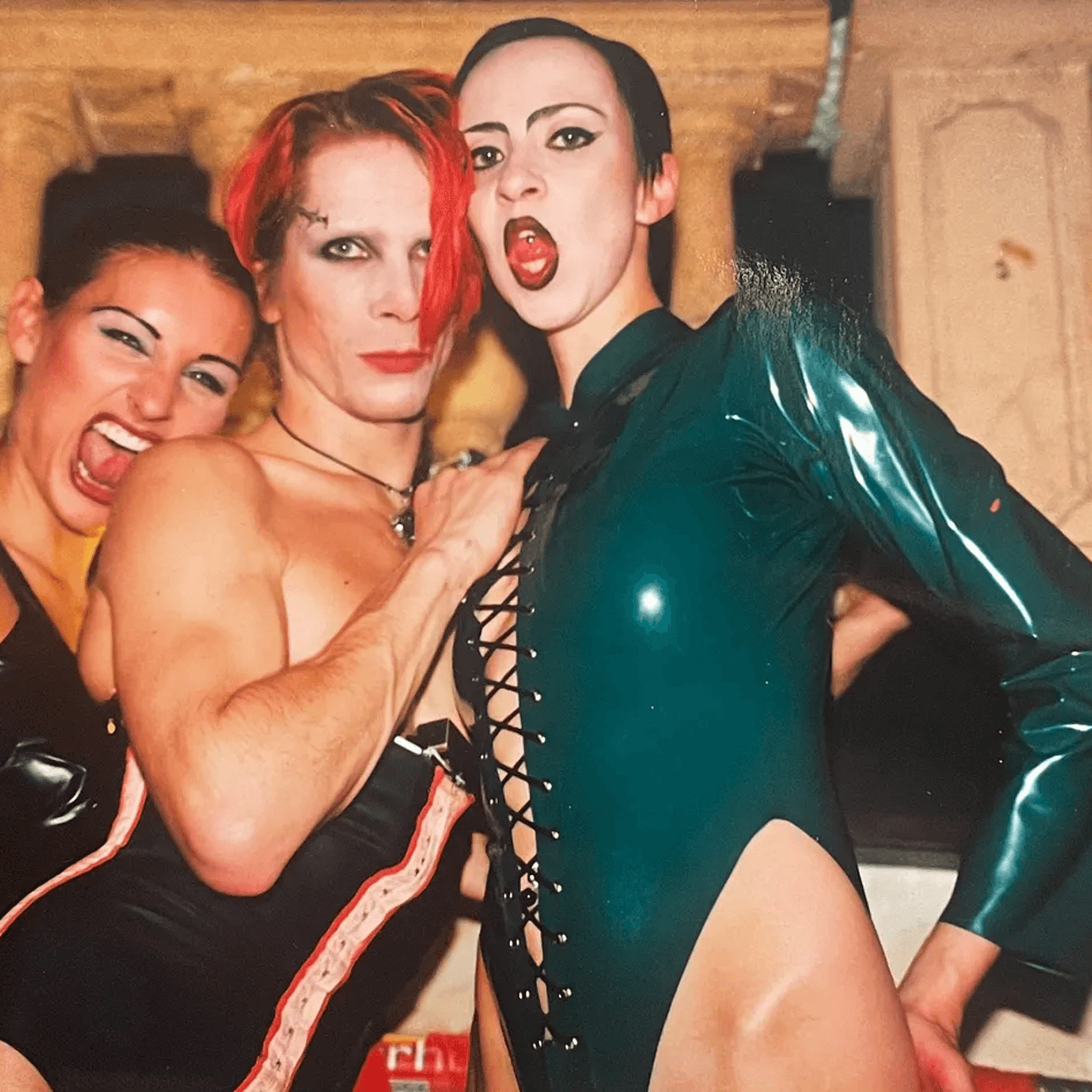
Drags in theatrale creaties, yuppen, dinky’s, studenten, kantoortijgers, gays en andere nachtvlinders. Wie medio jaren ’90 op een zondagavond over het Stationsplein liep, zag meteen: hier gebeurde iets. Terwijl elders in Eindhoven het weekend praktisch al voorbij was, liep het plein vol met mensen in flamboyante outfits. Eerst afkomstig uit de regio, later uit het hele land.
Ja, er lag een voorbedachte strategie aan de basis. Maar de DansSalon van toen was ook een optelsom van nieuwsgierigheid, lef en timing. Niet uit één brein, maar als samenloop van ideeën, mensen en momenten die perfect op elkaar aansloten. Toch is er één rode draad: het was een club waar je binnenstapte als toeschouwer, maar naar buiten kwam als onderdeel van een verhaal dat je niet snel vergat.
En precies dat verhaal lijkt anno 2026 een nieuw hoofdstuk te krijgen. Eindelijk, want eerdere pogingen wilden maar niet echt lukken, door faillissementen, afgelastingen en een doorstart in een sprookjesgrot waar de echte betovering ontbrak.
Verwacht 28 maart in het Klokgebouw geen platte reünie, maar een eerste eigentijdse editie van de formule die destijds clubbers uit het hele land trok. In een co-productie met PIXL draaien resident-dj’s Marco V en Benjamin Bates - voor het eerst back-to-back - house-klassiekers van weleer, in een opgefrist jasje. Drags en dansers van toen én nu zorgen ondertussen voor totaaltheater, maar dan zonder (telefoon)camera’s. Alle kaarten waren in twee uur weg en lang niet alleen naar oudere ravers.
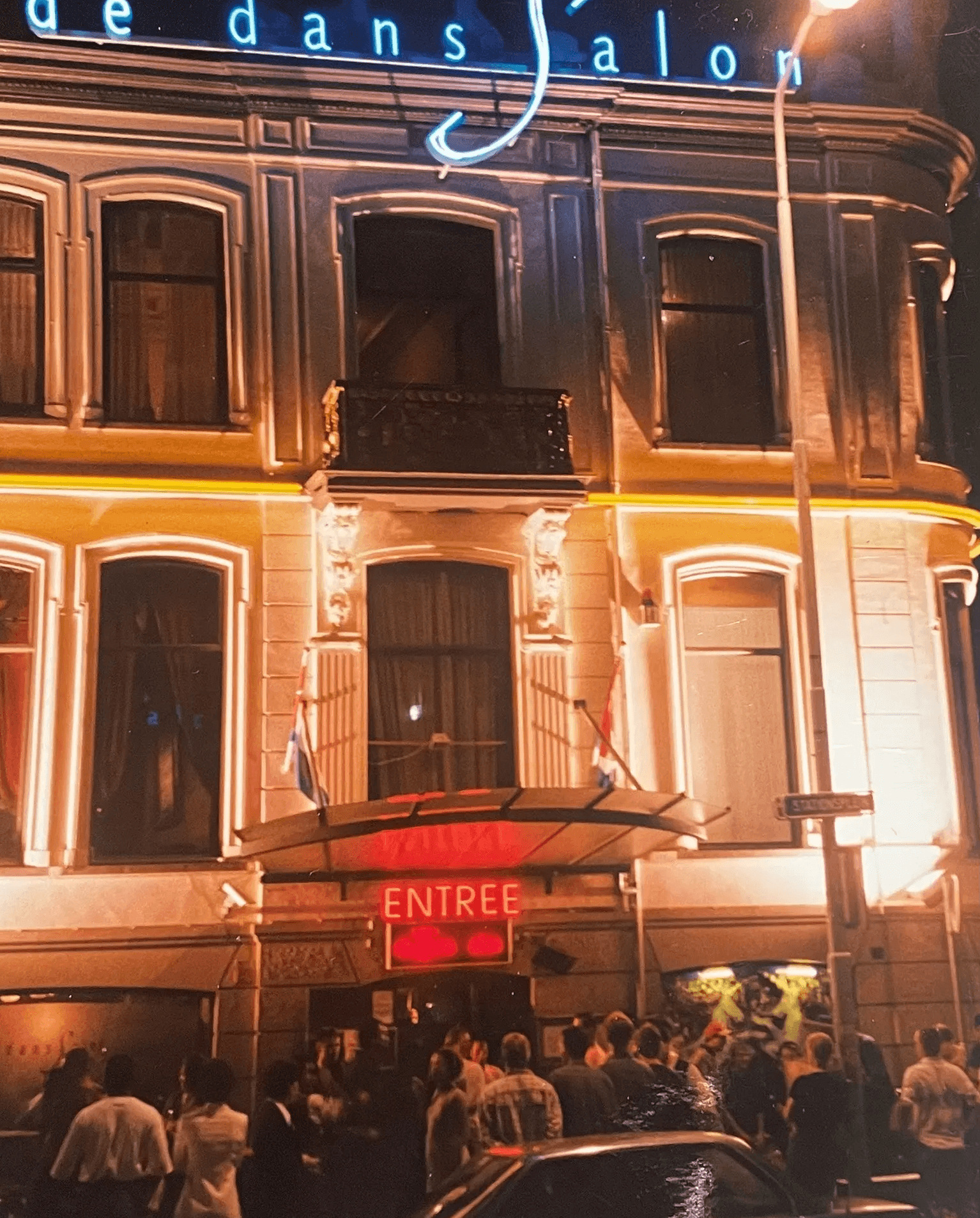
Samen met zijn toenmalige zakenpartner Han van Waarden, met wie hij in Den Bosch eerder discotheek The Galaxy runde, nam Jos de DansSalon in 1994 over. In de jaren ervoor, onder de eerste eigenaren, wilde de zaak niet echt draaien maar onder Jos en Han verandert dat, al duurde het ook even voor ze de club aan de praat kregen. Daarbij kregen ze de hulp van een ‘absolute topper’ als bedrijfsleider, Francis Kam.
The total theatre often began even outside. If there was a queue and it was freezing, Salvation Army‑like figures appeared with cups of warm soup. In summer, visitors spontaneously jumped into a paddling pool placed outside without warning. Or you were greeted by someone introducing herself as “the new owner” — an actress playing over-the-top so convincingly that you instantly sensed: this would not be a normal night.
Inside, the tempo only intensified. Drags and performers mixed with the crowd rather than staying on stage. Everything was designed so that you didn’t simply watch — you felt you were part of a living organism that continuously changed and improvised. A party reinventing itself every single night. Jos: “Things didn’t have to be beautiful — we wanted wild stories.”
What set the DansSalon apart from many other clubs was an additional layer you only noticed once you were deep in the room. The audience was an unexpectedly diverse mix — fashion‑forward hipsters, healthcare workers, young straight couples, outspoken queer visitors, shy newcomers, and drag queens who could command the room with a single glance.
Jos: “It wasn’t a gay club. It was gay‑minded. Everyone had to feel welcome and safe. Acceptance was a prerequisite.”
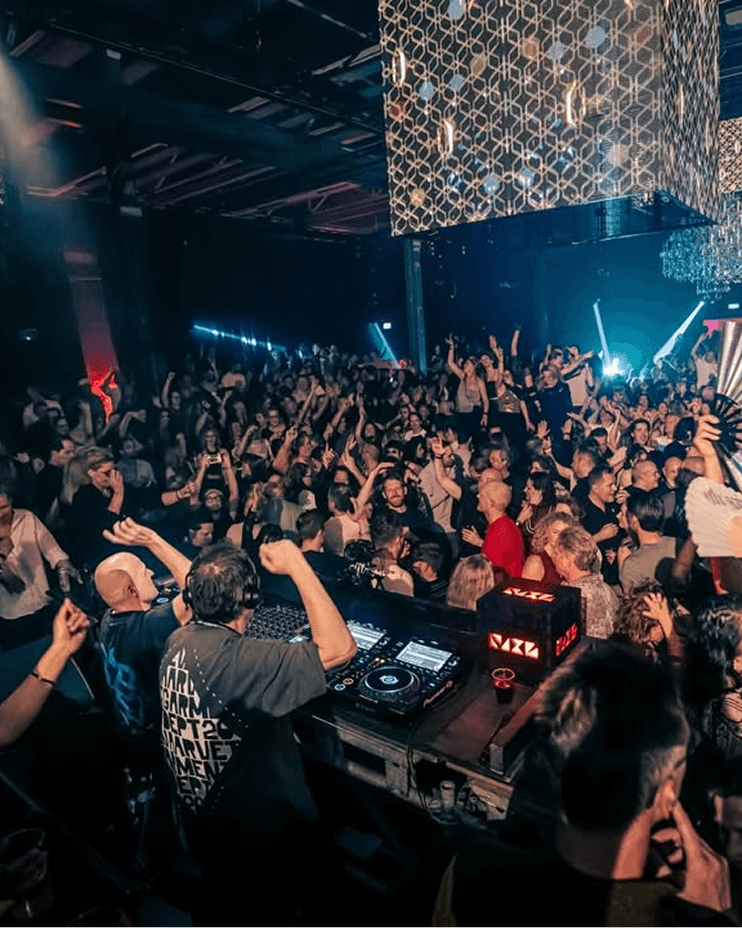
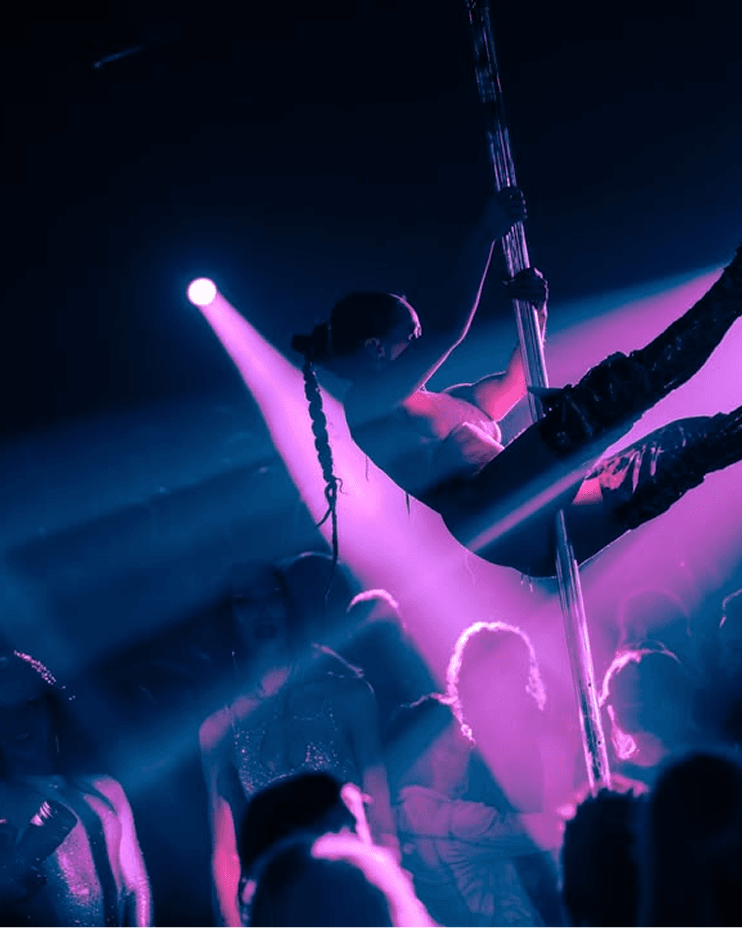
That mentality eventually became deeply felt and lived, after consistent effort from Jos and Han. Visitors — especially on Sundays — dressed extravagantly, expressively, sometimes almost ceremonially. And those who didn’t care for extravagance were equally welcome; no one looked twice at someone entering in a simple outfit. It was all about freedom: the feeling that, for a moment, you could be completely yourself without any filter or façade.
Benjamin Kuijten, who worked his way up from coat-check and barback to resident DJ (as Benjamin Bates): “For many queer Brabanders — though the term wasn’t much used back then — it was one of the few places where you weren’t just tolerated, but celebrated.” For others it was an eye-opener: a safe first encounter with an open‑minded cultural climate that hardly existed in Eindhoven then. “It wasn’t just emancipation of certain groups — it was that anyone could be themselves without judgment. That was rare.”
According to him, that’s exactly what a substantial part of the new generation today is looking for. In a time when phones can record every move, and nightlife often feels commercial and controlling, the desire for spaces where one can feel free is growing. “In that sense the last 20 years have been quite boring,” says Benjamin, who also works with younger generations as a teacher at Fontys Rockacademy. “Young people now want spaces where they can just go, without being stared at.”
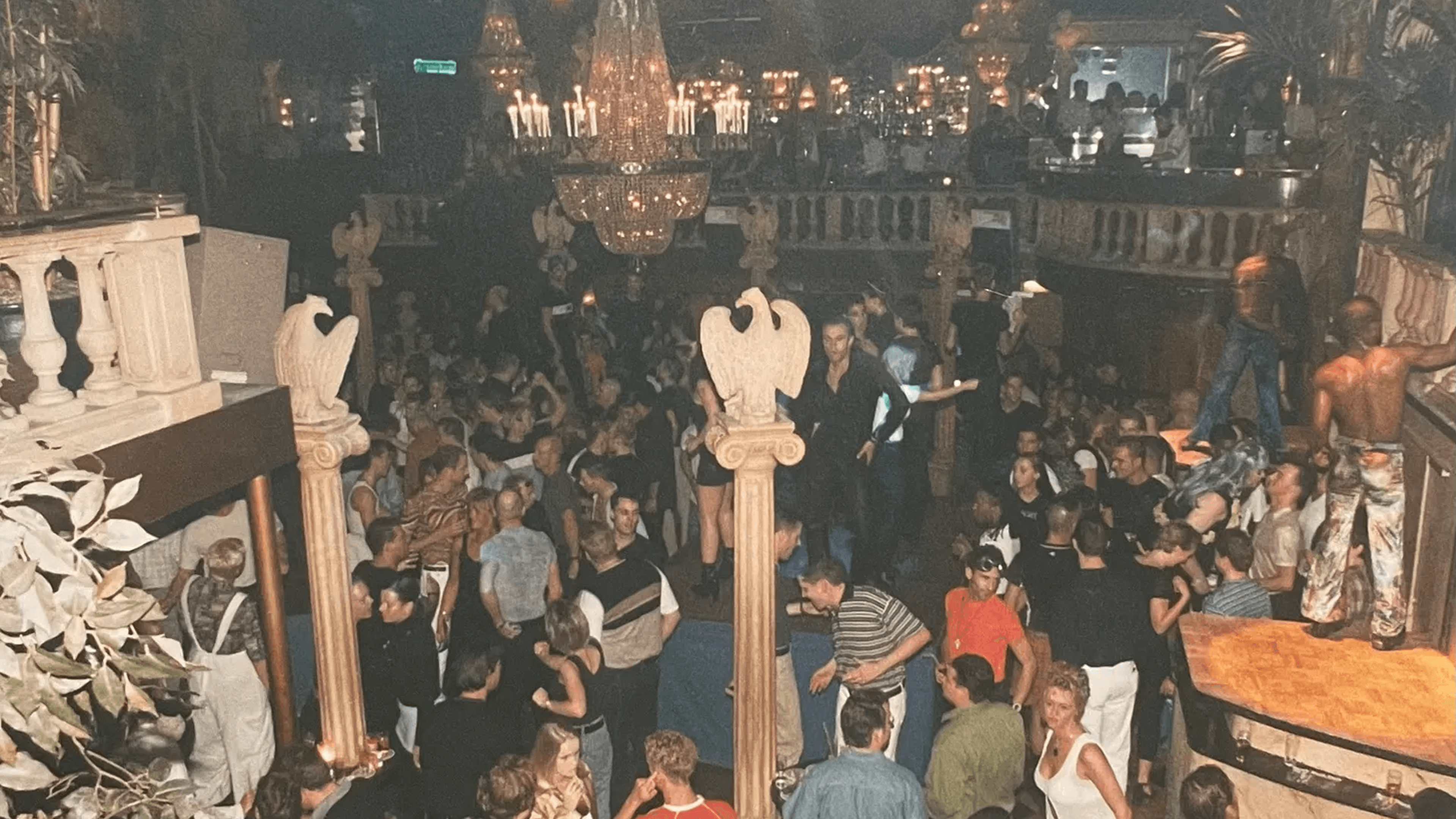
The old DansSalon offered exactly that long before anyone used the term “safe space.” The club didn’t just have a unique atmosphere — it had a signature sound. The name inseparable from that: Marco V(erkuijlen), later joined in the booth by Benjamin. The way they played differed from typical clubs of the time. Where elsewhere long house records rolled on as hypnotic rhythms, they chose something closer to a megamix, but in a club format. Jos insisted on this with his DJs: “Switch lightning fast, keep building, never slacken.”
He felt it immediately when he received Marco’s cassette tape — from a rural Brabant disco where he had known him. “He played three times as many records as others. Every new track was a new impulse. It was one long train that never stopped.” The result feels surprisingly fresh today: fast house with trance influences, now completely back in vogue. Benjamin laughed when he found old recordings: “We played at 142 bpm, standard. And now suddenly that’s cool again.”
There was one major challenge: the original 90s tracks no longer match modern audio standards. So Benjamin and Marco spent weeks remastering and reconstructing around 200 old tracks. “Music today sounds louder, fuller. So we’re mastering everything again to avoid that.” The result: an evening that sounds like now, but feels like then.
Like all iconic clubs, the DansSalon had a moment when things shifted. Part of this came with the television era — specifically the cameras of TMF, which filmed and broadcast The DJs from the club every Friday. A ratings hit, but with a downside: what once was intimate and safe partly became a place where people came to watch, not celebrate.
Benjamin: “Once cameras were pointed at the crowd, a different kind of audience arrived. It broke something.” Jos saw the same: “Voyeurs showed up. People who came to look, not participate. Fridays were the worst.”
The club world also changed rapidly. Festivals rose, business conflicts interfered, new generations wanted something else. But what remained — until today — was a sense of longing. As if something unfinished was left behind. A story never fully closed.
And that feeling now turns out to be fertile ground. The night that the popular Eindhoven club concept PIXL is creating on Saturday, March 28 — in collaboration with Marco V and Benjamin Bates — did not arise from pure nostalgia, but from contemporary relevance. PIXL organizer and resident Pieter Lepelaars did not need long to decide when Marco proposed a revival and suggested the Klokgebouw.
“With PIXL, we’ve proven last year that club concepts work extremely well there. So with that venue, the DansSalon name, and the DJs from back then — who have never played back‑to‑back — I saw it shine immediately.” Pieter experienced the tail end of the DansSalon hype as a teenager. “Going for the first time to the club I only knew from TV — it was mythical.”
To gauge interest, they posted a teaser video last year. The reaction was instant. Pieter: “In 5 days we had 100,000 plays, now almost 200,000 — without any social media budget. Unprecedented.”
Marco V & Benjamin Bates present De DansSalon will be a night that honors the past but breathes the energy of 2026. Besides the polished tracks from 1992–2000, expect an intimate club‑within‑a‑club setup with the iconic chandelier, contemporary lights and sound, drags and dancers from then and now, a low‑phone policy, and — to the organizers’ delight — a crowd aged 21 to 60. Pieter: “Not just thirty‑ and forty‑somethings — twenty‑somethings are curious about that legendary past.”
There is also strong interest within the queer community. Pieter: “There are few real fixed places in Eindhoven for that community. So this feels like an opportunity — not just for fans of the past, but for young people seeking a safe place that doesn’t yet exist.”
Partly for that reason, a low‑phone policy applies — visitors are asked not to take photos or videos. And of course, the performances feed the vibe. Former house dancer Jean-Paul will perform for the first time in 25 years, while Striptopia represents the new generation. The internationally touring modern strip‑club concept comes from American‑Eindhoven designer Maggie Saunders and fits seamlessly into the evening.
Maggie: “Striptopia is entirely about inclusivity. People often confuse that with being queer. But I look at individual talents — how they can show a piece of themselves and inspire the audience to give something back, to live in the moment and become freer.” For that reason she works often with sex workers. “Because they know better than most performers how to take care of the audience. They really provide that extra emotional layer.”
Together with Maggie — who also feels the lack of queer spaces in Eindhoven — the organizers hope that this edition will lay the foundation for a new, longer-running DansSalon chapter. Benjamin: “Our goal isn’t just this one night. We want to see if we can create something lasting.” Pieter: “Not weekly, but maybe once every few months. And it would be amazing if visitors adopted the old dress and dance to impress mindset — becoming the entertainment themselves. That doesn’t happen in one night — that grows when you do this more often.”
For Jos, who declined previous revival attempts, this edition is different. “Those earlier times, the philosophy wasn’t right — they just wanted to milk the name.” But now that Benjamin and Marco are involved, he trusts the process. “Then there’s heart behind it.” So he shares his story and will be there on March 28, though he doesn’t want to be treated as a guest of honor. “I don’t like that.”
Is he proud of his legacy? “That’s not the word I’d use, but I look back on it fondly. I mean — I pulled that off.”
Without its glory days, there would be no revival. A new DansSalon at another iconic venue, for a new generation — but with the soul of the past.
Benjamin puts it best: “Accessibility, safety, no cameras, being who you are. That was the DansSalon then. And it is again now.”